
Descrizione del prodotto
Descrizione del prodotto
Bevel Gear:
1. Made in CK45 or stainless steel
2. All sizes, from M1 to M8, with different teeth
3. Bevel gear, spur gear
Bevel Gear:
1. Manufactured by HangZhou Vision Industrial Group Comany for more than 16 years.
2. Material: With CK45 or stainless steel
3. All sizes, from M1 to M8, with different teeth
4. All kinds of gears, bevel gear, spur gear, spiral gear, helical gear, double helical gear
5. Customized gear
6. Welcome your inquiry
Product Attribute
|
Applicazione |
Motor, Machinery, Marine, Agricultural Machinery |
|
Hardness |
Hardened Tooth Surface |
|
Gear Position |
External Gear |
|
Manufacturing Method |
Cut Gear |
|
Toothed Portion Shape |
Bevel Wheel |
|
Material |
45c Steel |
|
Type |
Ingranaggio conico |
| port |
ZheJiang |
| payment |
L/C, T/T |
| package | Polybags and Carton Box and Woodencase |
Detailed Photos
Our Advantages
Packaging & Shipping
| WHY CHOOSE US |
| Comprehensive Product Portfolio We produce and supply a wide range of power transmission products including drive chains, leaf chains, conveyor chains, agricultural chains, sprockets, and couplings. This one-store-for-all shopping experience will significantly reduce your searching costs while guarantee youfind what you want at 1 click. Value Choice Products Our products are the best combination of quality and price, and you get what Seasoned Sales Associates and Engineers We have 15 seasoned sales associates and 5 engineers; |
| FAQ |
| Q1: What’s your average lead time? A: It varies. Our regular end-to-end lead time is 1-2 months.. We also provide express shipments for rush orders. For details,please consult our sales associate. Q2: Is your price better than your competitors given the same quality? Q4: Can we inspect the goods before shipment? Q5: What kind of payment method is acceptable for your mill? Q6: What if I have any other questions?
|
| Applicazione: | Motor, Machinery, Marine, Agricultural Machinery |
|---|---|
| Hardness: | Hardened Tooth Surface |
| Gear Position: | External Gear |
| Manufacturing Method: | Cut Gear |
| Forma della porzione dentata: | Bevel Wheel |
| Materiale: | 45c Steel |
| Samples: |
US$ 10/Piece
1 Piece(Min.Order) | |
|---|
| Customization: |
Available
| Customized Request |
|---|
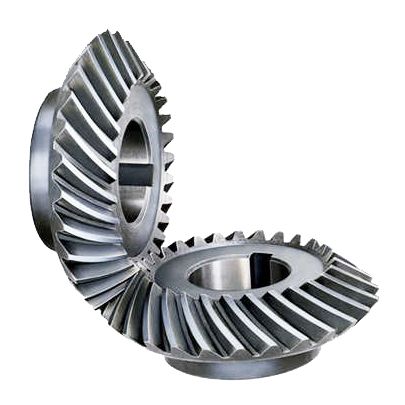
Can bevel gears be used in precision manufacturing equipment?
Yes, bevel gears can be used in precision manufacturing equipment due to their ability to transmit motion and power at varied angles with high accuracy. Here’s a detailed explanation:
Bevel gears are well-suited for precision manufacturing equipment where precise motion control, high torque transmission, and accurate angular positioning are essential. Here are some key reasons why bevel gears are suitable for such applications:
- Angular Transmission: Bevel gears excel at transmitting motion and power between intersecting shafts at different angles. In precision manufacturing equipment, where components often require precise angular positioning, bevel gears provide an efficient means of achieving the necessary motion transfer. They allow for smooth and accurate rotation, ensuring precise alignment and positioning of machine components.
- Compact Design: Bevel gears have a compact design, making them suitable for applications where space is limited. In precision manufacturing equipment, where machines often have complex structures and require tight integration of components, the compact size of bevel gears allows for efficient utilization of available space. This is particularly advantageous when designing compact and high-precision machinery.
- High Torque Transmission: Bevel gears are capable of transmitting high torque loads, making them suitable for precision manufacturing equipment that requires the transmission of substantial power. Whether it’s in rotary tables, indexing mechanisms, or gearboxes, bevel gears can efficiently transfer high torque while maintaining accuracy and precision in motion control.
- Accuracy and Backlash Control: In precision manufacturing equipment, minimizing backlash and ensuring accurate motion control are critical. Bevel gears can be manufactured with high precision to achieve tight tolerances and minimal backlash. This allows for precise positioning, accurate motion control, and repeatable performance, which are essential in precision manufacturing processes.
- Customization Options: Bevel gears can be customized to meet specific requirements of precision manufacturing equipment. Different tooth profiles, gear ratios, materials, and surface treatments can be employed to optimize the gear performance for specific applications. This customization capability allows gear engineers to design bevel gears that precisely match the needs and specifications of the equipment.
Examples of precision manufacturing equipment where bevel gears are commonly used include CNC machines, milling machines, gear hobbing machines, rotary tables, indexing mechanisms, and various types of gearboxes. These machines rely on the precise and reliable motion transmission provided by bevel gears to achieve accurate and high-quality manufacturing processes.
It is important to note that the selection and design of bevel gears for precision manufacturing equipment should consider factors such as load requirements, speed, operating conditions, backlash limitations, and noise considerations. Gear engineers and machine designers often conduct detailed analyses and calculations to ensure the bevel gears meet the necessary performance criteria and contribute to the overall precision and reliability of the equipment.
In summary, bevel gears are well-suited for precision manufacturing equipment due to their ability to provide accurate angular transmission, compact design, high torque transmission, and customization options. Incorporating bevel gears in precision machinery contributes to precise motion control, accurate positioning, and reliable performance, enabling the production of high-quality and precise manufactured components.
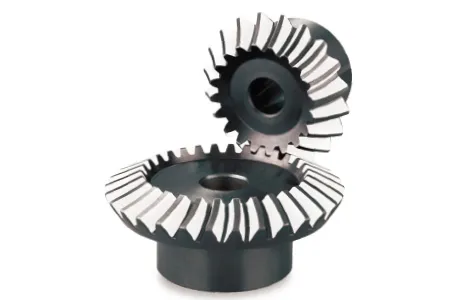
Come si assicura il corretto allineamento quando si collega una coppia conica?
Un allineamento corretto è fondamentale quando si collega un ingranaggio conico per garantire una trasmissione efficiente della potenza, un funzionamento regolare e una lunga durata del sistema di ingranaggi. Ecco una spiegazione dettagliata di come garantire un allineamento corretto:
Quando si collega un ingranaggio conico, le seguenti operazioni possono contribuire a garantire un allineamento corretto:
- Controllare le specifiche dell'ingranaggio: Per prima cosa, esaminare le specifiche dell'ingranaggio fornite dal produttore. Queste includono informazioni sul progetto dell'ingranaggio, sulle tolleranze e sui requisiti di allineamento. La comprensione di queste specifiche è essenziale per ottenere l'allineamento desiderato.
- Preparare le superfici di montaggio: Assicurarsi che le superfici di montaggio degli ingranaggi, come gli alberi o i riduttori, siano pulite, prive di detriti e adeguatamente preparate. Eventuali irregolarità o difetti superficiali possono influire sull'allineamento e causare problemi di disallineamento. Rimuovere eventuali bave, intaccature o punti ruvidi che potrebbero interferire con il corretto alloggiamento degli ingranaggi.
- Utilizzare gli strumenti di allineamento: Gli strumenti di allineamento, come gli indicatori a quadrante o i sistemi di allineamento laser, possono essere utili per ottenere un allineamento preciso. Questi strumenti consentono di misurare e regolare con precisione la posizione dell'ingranaggio rispetto ai componenti di accoppiamento. Seguire le istruzioni fornite con gli strumenti di allineamento per impostare ed eseguire correttamente il processo di allineamento.
- Allineamento assiale: Il corretto allineamento assiale è fondamentale per le ruote coniche. L'allineamento assiale si riferisce all'allineamento dell'asse di rotazione dell'ingranaggio parallelo all'asse di rotazione dell'ingranaggio di accoppiamento. Ciò garantisce un corretto ingranamento e una corretta distribuzione del carico. Utilizzare gli strumenti di allineamento per misurare e regolare l'allineamento assiale, apportando le necessarie modifiche alla posizione dell'ingranaggio o spessorando come richiesto.
- Allineamento radiale: L'allineamento radiale prevede l'allineamento dell'asse di rotazione dell'ingranaggio perpendicolare all'asse di rotazione dell'ingranaggio di accoppiamento. Un corretto allineamento radiale aiuta a prevenire i carichi laterali, l'usura eccessiva e la generazione di rumore. Utilizzare gli strumenti di allineamento per misurare e regolare l'allineamento radiale, assicurandosi che la posizione dell'ingranaggio sia regolata o spessorata correttamente per ottenere l'allineamento desiderato.
- Verificare lo schema di contatto dei denti: Dopo aver allineato gli ingranaggi, è importante verificare l'andamento del contatto dei denti. Lo schema di contatto dei denti deve essere uniformemente distribuito sulle superfici dei denti dell'ingranaggio per garantire una corretta ripartizione del carico e ridurre al minimo l'usura. Eseguire un'ispezione visiva o utilizzare strumenti specializzati, come i composti per la marcatura degli ingranaggi, per controllare e regolare lo schema di contatto dei denti, se necessario.
Seguendo questi passaggi e utilizzando gli strumenti di allineamento appropriati, è possibile garantire un allineamento corretto quando si collega una coppia conica. Un allineamento corretto favorisce una trasmissione efficiente della potenza, minimizza l'usura, riduce la rumorosità e prolunga la durata del sistema di ingranaggi.
Vale la pena di notare che ogni sistema di ingranaggi può avere requisiti e considerazioni specifiche per l'allineamento. Consultare le linee guida e le best practice del produttore di ingranaggi e rivolgersi a ingegneri esperti per garantire il corretto allineamento degli ingranaggi conici nella propria applicazione specifica.
What are the applications of a bevel gear?
A bevel gear finds applications in various industries and mechanical systems where changes in direction or speed of rotational motion are required. Here’s a detailed explanation of the applications of a bevel gear:
- Industria automobilistica: Bevel gears are widely used in the automotive industry, particularly in differentials. Differentials are responsible for distributing torque between the driving wheels of a vehicle, allowing them to rotate at different speeds when turning. Bevel gears in differentials transmit power from the engine to the wheels, enabling smooth cornering and improved traction.
- Mechanical Power Transmission: Bevel gears are employed in mechanical power transmission systems to change the direction of rotational motion. They are used in applications such as power tools, machine tools, conveyors, and printing presses. By meshing with other bevel gears or with spur gears, they transmit torque and power efficiently from one shaft to another, accommodating changes in direction and speed.
- Marine Propulsion Systems: Bevel gears are extensively used in marine propulsion systems, including boats and ships. They are commonly found in the propulsion shaft line, where they transmit torque from the engine to the propeller shaft, allowing the vessel to move through water. Bevel gears in marine applications are designed to withstand high loads, resist corrosion, and operate efficiently in harsh environments.
- Industria aerospaziale: Bevel gears are utilized in various aerospace applications. They are employed in aircraft landing gear systems, where they transmit torque from the hydraulic motor to extend or retract the landing gear. Bevel gears are also found in helicopter rotor systems, providing the necessary power transmission to rotate the rotor blades.
- Railway Systems: Bevel gears play a crucial role in railway systems, particularly in locomotives and rolling stock. They are used in the transmission systems to transfer power from the engine to the wheels. Bevel gears ensure smooth and efficient power transfer, enabling the train to move forward or backward while negotiating curves on the track.
- Macchinari industriali: Bevel gears are extensively employed in various industrial machinery, such as milling machines, lathes, and industrial robots. They facilitate changes in direction and speed of rotational motion, enabling precise positioning, accurate cutting, and smooth operation of the machinery.
- Mining and Construction Equipment: Bevel gears are used in mining and construction equipment to transfer power and torque in heavy-duty applications. They are found in equipment such as excavators, bulldozers, and crushers, where they provide reliable power transmission in challenging environments.
These are just a few examples of the applications of bevel gears. Their ability to transmit power, change the direction of rotational motion, and accommodate intersecting shafts makes them versatile and suitable for a wide range of industries and mechanical systems.
In summary, bevel gears are extensively utilized in automotive differentials, mechanical power transmission systems, marine propulsion systems, aerospace applications, railway systems, industrial machinery, and mining and construction equipment. Their applications span across industries where changes in direction or speed of rotational motion are essential for efficient and reliable operation.


editor by CX 2023-09-14
 Italian
  English