
Descrizione del prodotto
Descrizione del prodotto
-K Series Helical Bevel Gearbox
K series gear reducer, manufactured according to international technical requirements, has a high scientific and technological content; Space saving, reliable and durable, high overload capacity, power up to 132KW; Low energy consumption, superior performance, reducer efficiency up to 95%
It is designed and manufactured on the basis of module combination system. There are a lot of motor combinations, installation forms and structural schemes. The transmission ratio is classified carefully to meet different operating conditions and realize electromechanical integration.
High transmission efficiency, low energy consumption and superior performance.
Reinforced high rigid cast iron box; The hardened gear is made of high-quality alloy steel. Its surface is carburized, quenched and hardened, and the gear is finely ground. It features stable transmission, low noise, large bearing capacity, low temperature rise, and long service life. Performance and characteristics:
1. The gear is carburized and quenched with high-quality alloy, the hardness of the tooth surface is up to 60 ± 2hrc, and the grinding accuracy of the tooth surface is up to 5-6
2. The computer modification technology is used to pre modify the gear, which greatly improves the bearing capacity of the reducer
3. Complete modular structure design is adopted from the box to the internal gear, which is suitable for large-scale production and flexible selection
4. The standard reducer models are divided according to the form of decreasing torque. Compared with the traditional equal proportion division, they are more in line with customer requirements and avoid power waste
5. It is designed and manufactured by cad/cam to ensure the stability of quality
6. Multiple sealing structures are adopted to prevent oil leakage
7. Multi directional noise reduction measures to ensure the excellent low noise performance of the reducer
8. The installation mode of Liyi products is flexible, which makes it easy for customers to choose K57 reducer, K67 reducer, K77 reducer, K87 reducer, K97 reducer, KA87 reducer, KA97 reducer, KA107 reducer, KA127 reducer
Product Features
1. Input mode: Coupled motor, belted motor, input shaft or connection flange.
2. Output: Right angle
3. Compact structure. Rigid tooth face. Carrying greater torque, high loading capacity.
4.High precision gear, ensuring the unit to operate stably, smooth transmission.
5. Low noise, long lifespan. Large overlap coefficient, abrasion resistant.
Our product line
| Hardness: | Hardened Tooth Surface |
|---|---|
| Installation: | 90 Degree |
| Layout: | Expansion |
| Gear Shape: | Ingranaggio conico |
| Step: | Single-Step |
| Tipo: | Gear Reducer |
| Samples: |
US$ 1000/Piece
1 Piece(Min.Order) | |
|---|
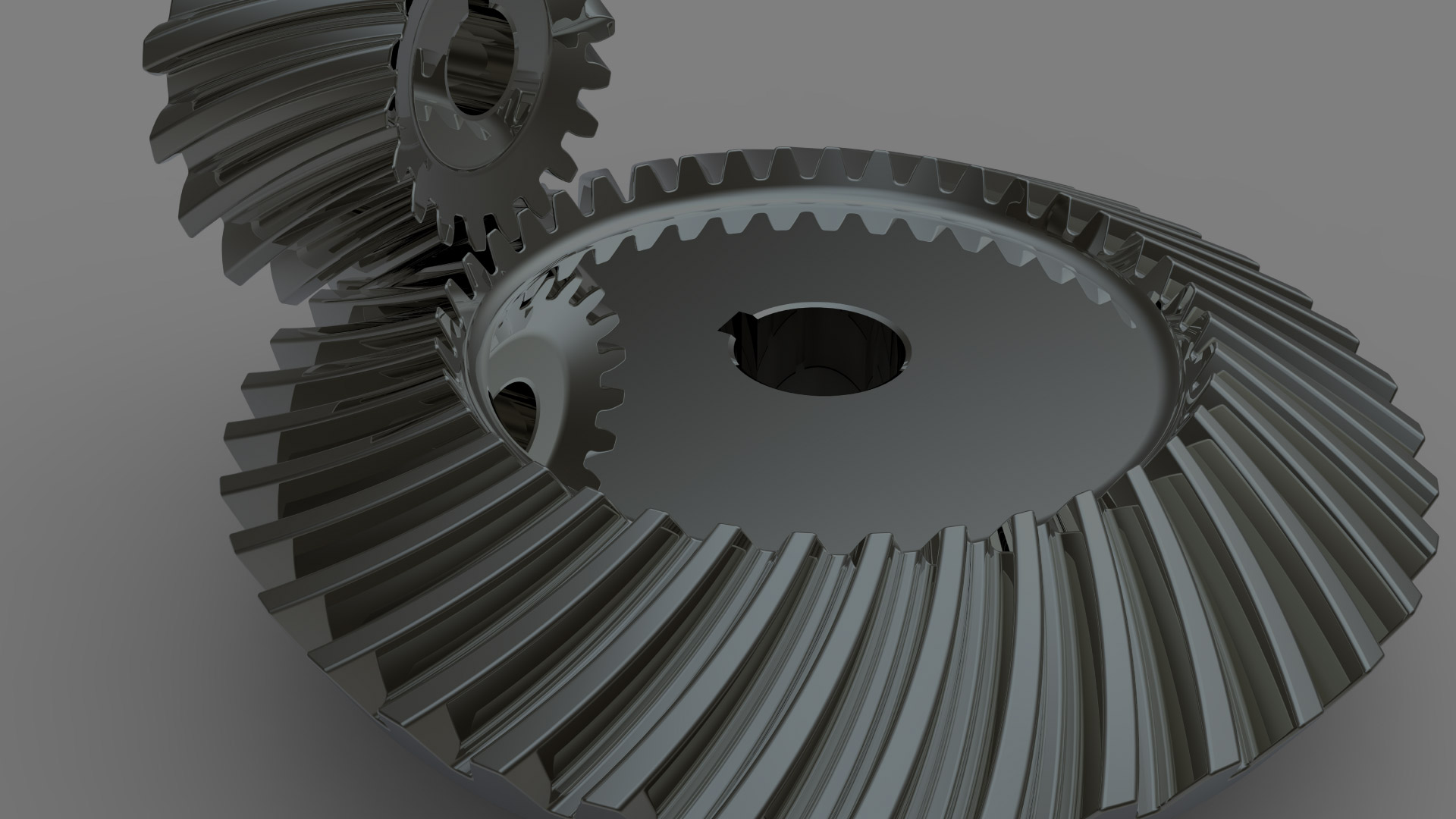
What are the advantages and disadvantages of using a bevel gear?
Bevel gears offer several advantages and disadvantages when used in mechanical systems. Understanding these pros and cons is crucial for selecting the appropriate gear type for a given application. Here’s a detailed explanation of the advantages and disadvantages of using a bevel gear:
Advantages of Bevel Gears:
- Power Transmission at Different Angles: Bevel gears are specifically designed to transmit power between intersecting shafts at different angles. They allow for efficient torque transmission and direction changes in applications where the input and output shafts are not parallel. This flexibility makes bevel gears suitable for a wide range of mechanical systems.
- Compact Design: Bevel gears have a compact and space-efficient design, allowing them to be used in applications with limited space constraints. Their ability to transmit power at an angle helps in optimizing the layout and arrangement of components in machinery and equipment.
- High Efficiency: Well-designed and properly maintained bevel gears can achieve high power transmission efficiency, typically above 95%. The efficient tooth engagement and load distribution in bevel gears minimize power losses due to friction and mechanical inefficiencies, resulting in energy-efficient operation.
- Smooth and Quiet Operation: Bevel gears generally provide smooth and quiet operation in properly designed and well-maintained systems. The meshing of the gear teeth is designed to minimize noise and vibration, ensuring smooth power transmission and reducing the need for additional noise-reducing measures.
- Versatilità: Bevel gears are available in various configurations, including straight bevel, spiral bevel, and hypoid bevel gears. This versatility allows them to be used in a wide range of applications across different industries, accommodating different load capacities, speed requirements, and operating conditions.
- High Load Capacity: Bevel gears are capable of handling high loads and transmitting substantial amounts of torque. Their robust design, accurate tooth engagement, and strong materials make them suitable for heavy-duty applications where reliable power transmission is required.
Disadvantages of Bevel Gears:
- Complex Manufacturing: Bevel gears are more complex to manufacture compared to other gear types due to their three-dimensional shape and intricate tooth profiles. The manufacturing process involves specialized equipment and expertise, which can increase production costs.
- Cost: Bevel gears, especially those with high precision and load capacities, can be relatively expensive compared to other types of gears. The cost of materials, manufacturing complexity, and quality requirements contribute to their higher price.
- Potential for Noise and Vibration: In certain operating conditions, such as high speeds or misaligned gears, bevel gears can generate noise and vibration. This can be mitigated through proper design, accurate manufacturing, and maintenance practices, but additional measures may be necessary to reduce noise and vibration levels in some applications.
- Sensitive to Misalignment: Bevel gears are sensitive to misalignment, which can lead to increased friction, accelerated wear, and reduced efficiency. Proper alignment and control of backlash are essential for optimal performance and longevity of the gear system.
- Complex Lubrication: The lubrication of bevel gears can be more challenging compared to parallel-axis gears. Due to their angled tooth engagement, ensuring proper lubrication film thickness and distribution across the gear teeth requires careful consideration. Inadequate or improper lubrication can result in increased friction, wear, and reduced efficiency.
It’s important to consider these advantages and disadvantages of bevel gears in the context of specific applications and operating conditions. Proper design, selection, manufacturing, and maintenance practices can help maximize the benefits of bevel gears while mitigating their limitations.
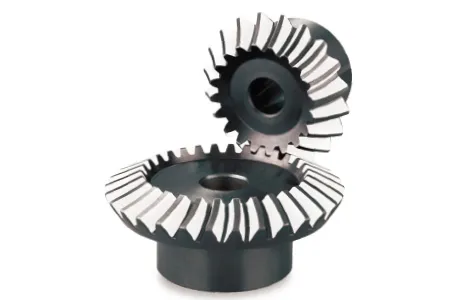
Come si assicura il corretto allineamento quando si collega una coppia conica?
Un allineamento corretto è fondamentale quando si collega un ingranaggio conico per garantire una trasmissione efficiente della potenza, un funzionamento regolare e una lunga durata del sistema di ingranaggi. Ecco una spiegazione dettagliata di come garantire un allineamento corretto:
Quando si collega un ingranaggio conico, le seguenti operazioni possono contribuire a garantire un allineamento corretto:
- Controllare le specifiche dell'ingranaggio: Per prima cosa, esaminare le specifiche dell'ingranaggio fornite dal produttore. Queste includono informazioni sul progetto dell'ingranaggio, sulle tolleranze e sui requisiti di allineamento. La comprensione di queste specifiche è essenziale per ottenere l'allineamento desiderato.
- Preparare le superfici di montaggio: Assicurarsi che le superfici di montaggio degli ingranaggi, come gli alberi o i riduttori, siano pulite, prive di detriti e adeguatamente preparate. Eventuali irregolarità o difetti superficiali possono influire sull'allineamento e causare problemi di disallineamento. Rimuovere eventuali bave, intaccature o punti ruvidi che potrebbero interferire con il corretto alloggiamento degli ingranaggi.
- Utilizzare gli strumenti di allineamento: Gli strumenti di allineamento, come gli indicatori a quadrante o i sistemi di allineamento laser, possono essere utili per ottenere un allineamento preciso. Questi strumenti consentono di misurare e regolare con precisione la posizione dell'ingranaggio rispetto ai componenti di accoppiamento. Seguire le istruzioni fornite con gli strumenti di allineamento per impostare ed eseguire correttamente il processo di allineamento.
- Allineamento assiale: Il corretto allineamento assiale è fondamentale per le ruote coniche. L'allineamento assiale si riferisce all'allineamento dell'asse di rotazione dell'ingranaggio parallelo all'asse di rotazione dell'ingranaggio di accoppiamento. Ciò garantisce un corretto ingranamento e una corretta distribuzione del carico. Utilizzare gli strumenti di allineamento per misurare e regolare l'allineamento assiale, apportando le necessarie modifiche alla posizione dell'ingranaggio o spessorando come richiesto.
- Allineamento radiale: L'allineamento radiale prevede l'allineamento dell'asse di rotazione dell'ingranaggio perpendicolare all'asse di rotazione dell'ingranaggio di accoppiamento. Un corretto allineamento radiale aiuta a prevenire i carichi laterali, l'usura eccessiva e la generazione di rumore. Utilizzare gli strumenti di allineamento per misurare e regolare l'allineamento radiale, assicurandosi che la posizione dell'ingranaggio sia regolata o spessorata correttamente per ottenere l'allineamento desiderato.
- Verificare lo schema di contatto dei denti: Dopo aver allineato gli ingranaggi, è importante verificare l'andamento del contatto dei denti. Lo schema di contatto dei denti deve essere uniformemente distribuito sulle superfici dei denti dell'ingranaggio per garantire una corretta ripartizione del carico e ridurre al minimo l'usura. Eseguire un'ispezione visiva o utilizzare strumenti specializzati, come i composti per la marcatura degli ingranaggi, per controllare e regolare lo schema di contatto dei denti, se necessario.
Seguendo questi passaggi e utilizzando gli strumenti di allineamento appropriati, è possibile garantire un allineamento corretto quando si collega una coppia conica. Un allineamento corretto favorisce una trasmissione efficiente della potenza, minimizza l'usura, riduce la rumorosità e prolunga la durata del sistema di ingranaggi.
Vale la pena di notare che ogni sistema di ingranaggi può avere requisiti e considerazioni specifiche per l'allineamento. Consultare le linee guida e le best practice del produttore di ingranaggi e rivolgersi a ingegneri esperti per garantire il corretto allineamento degli ingranaggi conici nella propria applicazione specifica.
What are the applications of a bevel gear?
A bevel gear finds applications in various industries and mechanical systems where changes in direction or speed of rotational motion are required. Here’s a detailed explanation of the applications of a bevel gear:
- Industria automobilistica: Bevel gears are widely used in the automotive industry, particularly in differentials. Differentials are responsible for distributing torque between the driving wheels of a vehicle, allowing them to rotate at different speeds when turning. Bevel gears in differentials transmit power from the engine to the wheels, enabling smooth cornering and improved traction.
- Mechanical Power Transmission: Bevel gears are employed in mechanical power transmission systems to change the direction of rotational motion. They are used in applications such as power tools, machine tools, conveyors, and printing presses. By meshing with other bevel gears or with spur gears, they transmit torque and power efficiently from one shaft to another, accommodating changes in direction and speed.
- Marine Propulsion Systems: Bevel gears are extensively used in marine propulsion systems, including boats and ships. They are commonly found in the propulsion shaft line, where they transmit torque from the engine to the propeller shaft, allowing the vessel to move through water. Bevel gears in marine applications are designed to withstand high loads, resist corrosion, and operate efficiently in harsh environments.
- Industria aerospaziale: Bevel gears are utilized in various aerospace applications. They are employed in aircraft landing gear systems, where they transmit torque from the hydraulic motor to extend or retract the landing gear. Bevel gears are also found in helicopter rotor systems, providing the necessary power transmission to rotate the rotor blades.
- Railway Systems: Bevel gears play a crucial role in railway systems, particularly in locomotives and rolling stock. They are used in the transmission systems to transfer power from the engine to the wheels. Bevel gears ensure smooth and efficient power transfer, enabling the train to move forward or backward while negotiating curves on the track.
- Macchinari industriali: Bevel gears are extensively employed in various industrial machinery, such as milling machines, lathes, and industrial robots. They facilitate changes in direction and speed of rotational motion, enabling precise positioning, accurate cutting, and smooth operation of the machinery.
- Mining and Construction Equipment: Bevel gears are used in mining and construction equipment to transfer power and torque in heavy-duty applications. They are found in equipment such as excavators, bulldozers, and crushers, where they provide reliable power transmission in challenging environments.
These are just a few examples of the applications of bevel gears. Their ability to transmit power, change the direction of rotational motion, and accommodate intersecting shafts makes them versatile and suitable for a wide range of industries and mechanical systems.
In summary, bevel gears are extensively utilized in automotive differentials, mechanical power transmission systems, marine propulsion systems, aerospace applications, railway systems, industrial machinery, and mining and construction equipment. Their applications span across industries where changes in direction or speed of rotational motion are essential for efficient and reliable operation.


editor by CX 2023-09-14
 Italian
  English